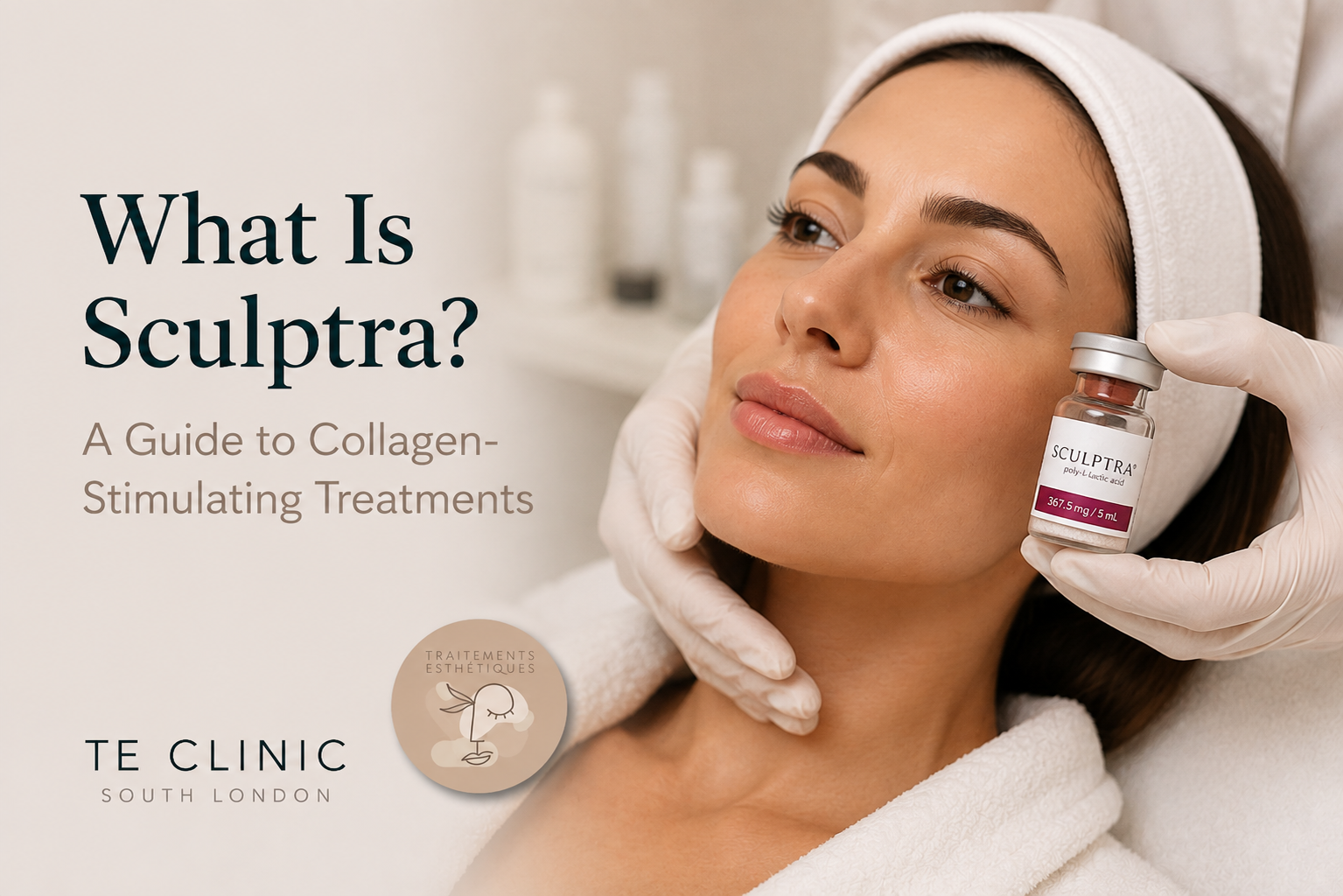
If you've been researching non-surgical ways to restore facial volume, you've probably come across Sculptra. It gets talked about a lot in aesthetics circles, but it works quite differently to a standard dermal filler, and that trips a lot of people up.
Here's a straightforward look at what it actually is, how it works, and what to expect if you're considering it.
What Sculptra Actually Is
Sculptra is made from poly-L-lactic acid, a biocompatible material that's been used safely in medical settings for decades, including in dissolvable stitches. In the UK, it's classified as a medical device rather than a prescription-only medicine, which is one of the reasons practitioners can discuss it openly with patients in a way they simply can't with Botox.
Unlike hyaluronic acid fillers, which add volume directly and give an immediate result, Sculptra doesn't fill anything on its own. It works with your body.
How It Works
Once injected, Sculptra stimulates your skin to produce its own collagen over time. Think of it less like filling a pothole and more like laying the groundwork for your skin to rebuild structure from underneath.
That means results build gradually, usually across several weeks and multiple sessions. Most treatment plans involve two to three sessions spaced around four to six weeks apart, with the full effect developing over a few months. This is a slower process than a typical filler. For some people, that's exactly the appeal: the change looks more natural because it's happening on a similar timescale to how skin naturally ages, just in reverse.
Who Tends to Consider It
People usually look into Sculptra when they're noticing:
· Hollowing in the cheeks or temples
· Gradual loss of facial volume that comes with age
· A desire for subtle, longer-term improvement rather than a quick fix
It's not a treatment for fine lines or very localised areas. A qualified practitioner will assess your face and tell you honestly whether it's the right fit, or whether something else would suit your goals better.
What a Consultation Should Cover
Because Sculptra works gradually and needs a course of sessions, the consultation matters more than it might for a same-day treatment. A good practitioner will walk you through:
· Your skin and facial structure, and whether Sculptra is appropriate
· Realistic timelines for seeing results
· How many sessions you're likely to need
· Aftercare, including the massage routine often recommended in the days following treatment
If a clinic skips straight to booking you in without a proper assessment, that's worth noticing.
Safety and Practitioner Training
Sculptra should only be administered by someone trained specifically in its use. The technique differs from standard filler injection, and the areas it's commonly used for (cheeks, temples) sit close to structures that require a confident, experienced hand.
Ask your practitioner about their specific training with Sculptra, not just aesthetics in general. It's a fair question, and any reputable clinic will expect it.
A Few Common Questions
How long does Sculptra last?
Results typically last around two years, sometimes longer, because you're not relying on a filler material breaking down. You're relying on the collagen your body has produced.
Does it hurt?
Most people describe mild discomfort rather than pain. Clinics generally use a local anaesthetic mixed into the product or applied beforehand.
Is there downtime?
Some swelling and small bumps at injection sites are common in the first few days and usually settle quickly. Bruising is possible, as with any injectable.
Can I see results straight away?
No, and that's expected. The whole point of Sculptra is gradual collagen production, so don't judge it against same-day filler results.
Considering Sculptra?
If you're weighing up your options, the most useful next step is an honest conversation with a practitioner who can look at your face specifically, not a generic price list. Bring your questions, including the ones above, and expect a clinic to answer them properly.