Why Lip Filler Gets a Bad Reputation
The most common concern patients raise before their first lip filler appointment is not the pain, the cost, or the downtime. It is this: I do not want to look overdone.
It is a completely understandable worry. Lip filler has a visibility problem — the results that attract attention are almost always the ones that went wrong or went too far. The treatments that go right are the ones nobody notices, because the lips simply look like better, healthier, more balanced versions of themselves.
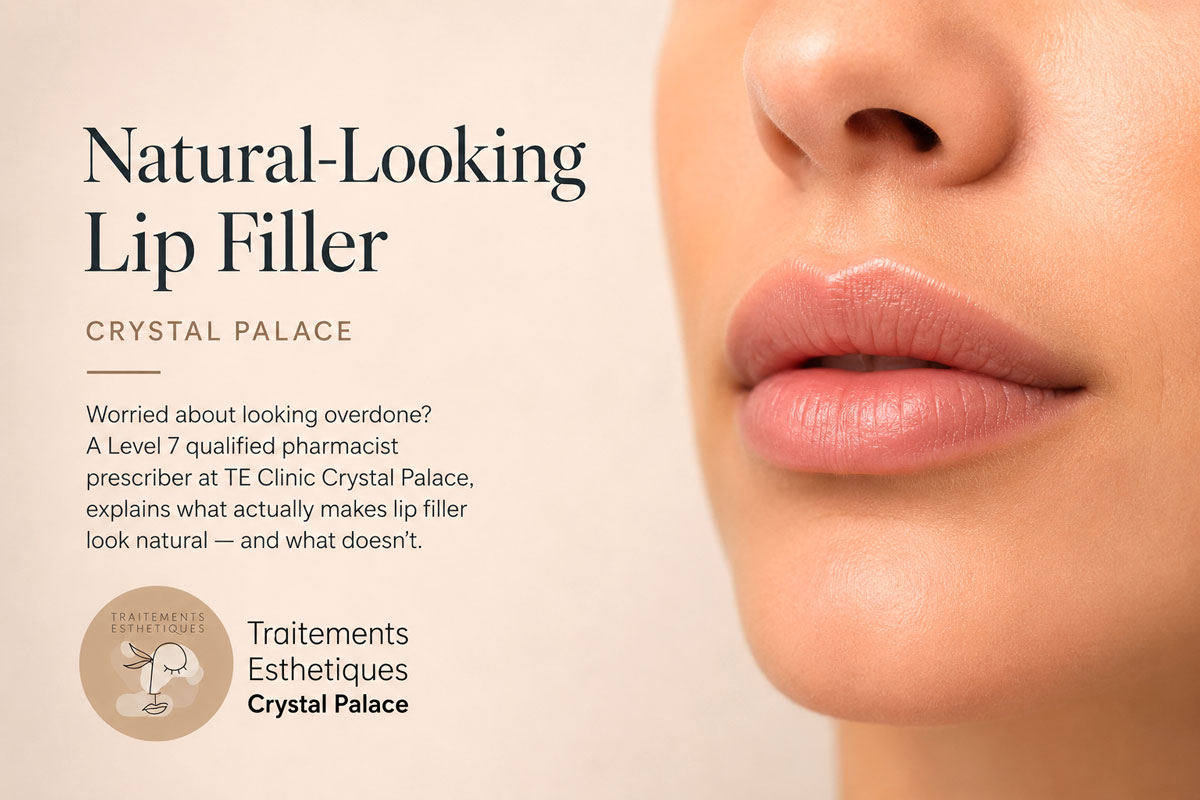
So what actually makes lip filler look natural? The answer is more nuanced than "use less filler" — and understanding it properly is the difference between a result you love and one you regret.
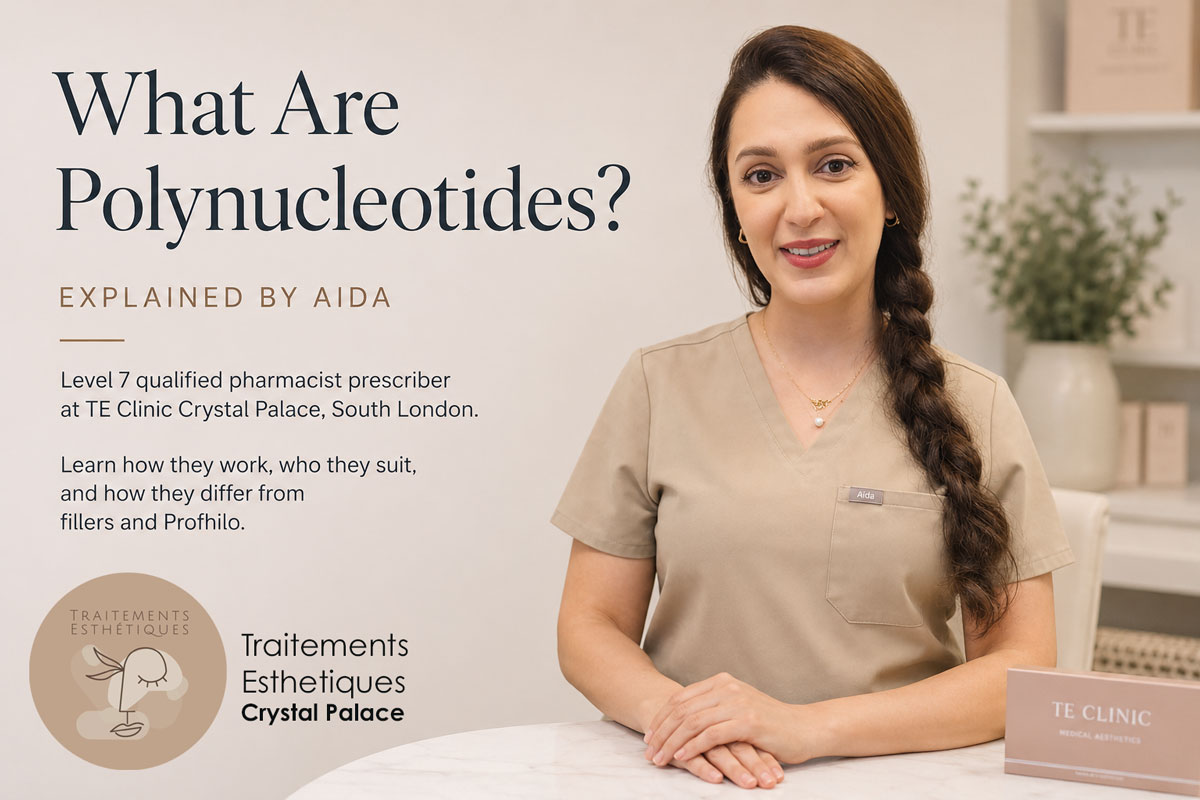
This guide, written by Aida, our Level 7 qualified pharmacist prescriber at TE Clinic Crystal Palace, explains the key factors that determine whether lip filler looks natural or not — and why the practitioner you choose matters more than almost anything else.
The over-filled, pillow-like lip results that became associated with aesthetic treatments a decade ago were not the inevitable outcome of the treatment. They were the outcome of a particular approach — one that prioritised volume over proportion, and size over harmony.
Aesthetic medicine has moved on significantly. The dominant trend in 2025 is not bigger lips but better lips — more defined, more balanced, more hydrated, with results that respect the natural architecture of the face rather than overriding it.
But the reputation lingers, and it shapes the anxiety that many patients bring to their first consultation. Understanding what actually causes unnatural results — and how to avoid them — is the most useful thing a patient can know before booking.
What Makes Lip Filler Look Unnatural?
Unnatural results almost always come down to one or more of the following:
Too much product. Overfilling is the most visible cause of unnatural-looking lips. When volume exceeds what the lip's natural structure can support, the result loses definition and the lip begins to look swollen rather than enhanced. The correct amount of filler varies significantly between patients — it is not a fixed quantity, and more is rarely better.
Ignoring facial proportions. The lips do not exist in isolation. They sit within a face that has its own proportions, bone structure, and natural balance. Lip filler that ignores the relationship between the lips, the chin, the nose, and the surrounding features can look out of place even if the lips themselves are technically well treated. Natural results always begin with the face as a whole, not just the lips.
Poor product selection. Not all hyaluronic acid fillers behave the same way. Products vary in their density, flexibility, and how they integrate with lip tissue. Using a product that is too firm or too dense for the lips — an area that moves constantly with expression and speech — can produce a result that looks and feels stiff and artificial.
Wrong injection technique. Lip filler is one of the most technique-sensitive treatments in aesthetic medicine. Precise placement matters enormously — in terms of depth, location, and the specific structures being enhanced. A practitioner without advanced training in lip anatomy may add volume without understanding how to shape, define, or balance the result.
Treating lips in isolation. The lips are shaped by the structures around them — including the vermillion border, the Cupid's bow, the philtrum columns, and the oral commissures. A natural result often involves working across several of these structures subtly, rather than simply injecting volume into the body of the lip.
What Actually Makes Lip Filler Look Natural?
Natural-looking lip filler results share a consistent set of characteristics, regardless of the patient's age, starting point, or the amount of product used.
Proportional enhancement. The ideal lip ratio — in most patients — is a lower lip that is slightly fuller than the upper, with the overall result in harmony with the rest of the face. A practitioner with a strong understanding of facial aesthetics will assess these proportions before touching a syringe, and plan the treatment around restoring or improving balance rather than simply adding volume.
Respect for the lip's natural shape. The most natural results work with the existing shape of the lip rather than trying to create a new one. The natural curve of the Cupid's bow, the subtle definition of the vermillion border, the individual character of the lip — these are features to enhance, not erase. A published framework for natural lip augmentation, developed by a panel of global aesthetic medicine experts and peer-reviewed in the Oxford academic journal Aesthetic Surgery Journal Open Forum, emphasises tailoring injection technique to individual anatomy as the foundation of consistent, natural results. Read the peer-reviewed research.
Conservative volume. Starting conservatively and building gradually is almost always the right approach for new patients. It allows the practitioner to assess how the lip responds, how swelling resolves, and whether further enhancement is needed. Patients who feel the urge to go bigger immediately are often better served by waiting to see their settled result before making that decision.
The right product for the area. Lips require a filler that moves naturally with expression — flexible enough to feel soft and behave naturally, but structured enough to provide definition where needed. Product selection is a clinical decision, not a cosmetic one, and it should be made by a practitioner with advanced training in injectables.
A practitioner who knows when to stop. One of the most important qualities in a lip filler practitioner is restraint. Knowing when the result is right — and resisting the temptation to add more — is a skill that develops with experience and is closely linked to a practitioner's understanding of natural facial aesthetics.
Why a Medical-Led Approach Produces Better Lip Filler Results
Lip filler is available in a wide range of settings across South London — from dedicated medical clinics to beauty salons. The difference in outcomes frequently comes down to the level of training the practitioner has and the clinical framework within which they work.
A Level 7 qualified practitioner has postgraduate-level training in facial anatomy, injection technique, and complication management. This is not simply a matter of credentials — it directly influences the quality of the assessment, the precision of the treatment, and the ability to manage anything unexpected.
At TE Clinic Crystal Palace, lip filler treatments are carried out by Aida, a Level 7 qualified aesthetic practitioner and fully qualified pharmacist prescriber. As a Medical Aesthetics Trainer, Aida also trains other practitioners in advanced injection techniques — which means the standard of care she brings to patient treatments reflects not just clinical practice but a deep, teachable understanding of what good technique actually looks like.
Every lip filler consultation at TE Clinic begins with a thorough facial assessment. This includes reviewing the proportions of the whole face, understanding what the patient wants to achieve, and being honest about what treatment can and cannot do. Lip filler is a prescription-only treatment — it must be prescribed by a qualified prescriber before it can be administered. At TE Clinic, Aida prescribes and treats, which means medical oversight is present throughout.
TE Clinic is also Save Face accredited, providing independent assurance that our qualifications, safety standards, and patient care meet nationally recognised requirements.
Common Questions About Lip Filler
Will lip filler hurt?
Most patients find lip filler well tolerated. A topical numbing cream is applied before treatment, and most hyaluronic acid fillers also contain a local anaesthetic. Some sensitivity at the injection points is normal, but significant discomfort is uncommon.
How much swelling should I expect?
Some swelling immediately after treatment is normal and expected. Most patients find the initial swelling resolves within 24 to 48 hours, though it can take up to two weeks for the final settled result to be fully visible. It is important not to judge the outcome before this point.
How long does lip filler last?
Results typically last between six and twelve months, depending on the product used, the individual's metabolism, and lifestyle factors. Our article on how long Botox and fillers last covers this in more detail.
Can lip filler be dissolved?
Yes. Hyaluronic acid fillers can be dissolved using an enzyme called hyaluronidase if a patient is unhappy with their result or experiences a complication. This is one of the reasons hyaluronic acid is the preferred choice for lip treatments — the reversibility provides an important safety net. At TE Clinic, as a prescriber-led clinic, we are equipped to manage this if needed.
Is there a difference between lip filler and a lip flip?
Yes — these are distinct treatments. A lip flip uses a small amount of anti-wrinkle injection above the upper lip to gently relax the muscle and create the appearance of a slightly fuller upper lip without adding volume. It suits some patients better than filler, particularly those who want a very subtle result. Our anti-wrinkle treatments page explains more.
What to Look for When Choosing a Lip Filler Clinic in Crystal Palace
With so many clinics offering lip filler across South London, knowing what to look for matters.
Before booking anywhere, it is worth asking:
- Is the practitioner Level 7 qualified in aesthetic medicine?
- Are they a qualified prescriber — and do they prescribe the treatment themselves?
- Is the clinic Save Face accredited?
- Do they train other practitioners, and can they explain their technique clearly?
- What is their protocol if something goes wrong?
A reputable, medically led clinic will answer all of these questions clearly and without hesitation. If a clinic is vague about qualifications or pressures you toward a same-day booking without a proper consultation, it is worth taking your time.
For a broader look at what qualifications to look for in any aesthetic clinic, our guide to choosing a safe Botox clinic in Crystal Palace applies equally here — the same principles of safety and medical oversight matter regardless of the treatment.
Lip Filler at TE Clinic Crystal Palace and South London
TE Clinic is based in Crystal Palace, South London, and sees patients from across the surrounding areas — including Dulwich, Bromley, Croydon, Norwood, Beckenham, and Chislehurst.
Our approach to lip filler is consultation-led and unhurried. We begin every appointment by understanding what you want to achieve, assessing your facial proportions, and giving you an honest view of what treatment can realistically deliver.
There is no pressure to proceed on the day, and we will always recommend starting conservatively if you are new to the treatment.
Natural-looking results are not an accident. They are the outcome of the right assessment, the right technique, and a practitioner who knows that the best lip filler is the kind nobody notices. Find out more and book a consultation.
Quick Summary: What Makes Lip Filler Look Natural?
- Proportional enhancement that respects the whole face, not just the lips
- Conservative volume — starting with less and building if needed
- The right product for the flexibility and feel lips require
- Precise injection technique from a Level 7 qualified practitioner
- A medical consultation that assesses facial anatomy before treatment
- A prescriber-led clinic where the same person assesses, prescribes, and treats you
AUTHOR BIO:
Written by Aida, Specialist Clinical Pharmacist, Level 7 Qualified Aesthetic Practitioner, Pharmacist Prescriber, and Medical Aesthetics Trainer at TE Clinic South London. Save Face accredited.